
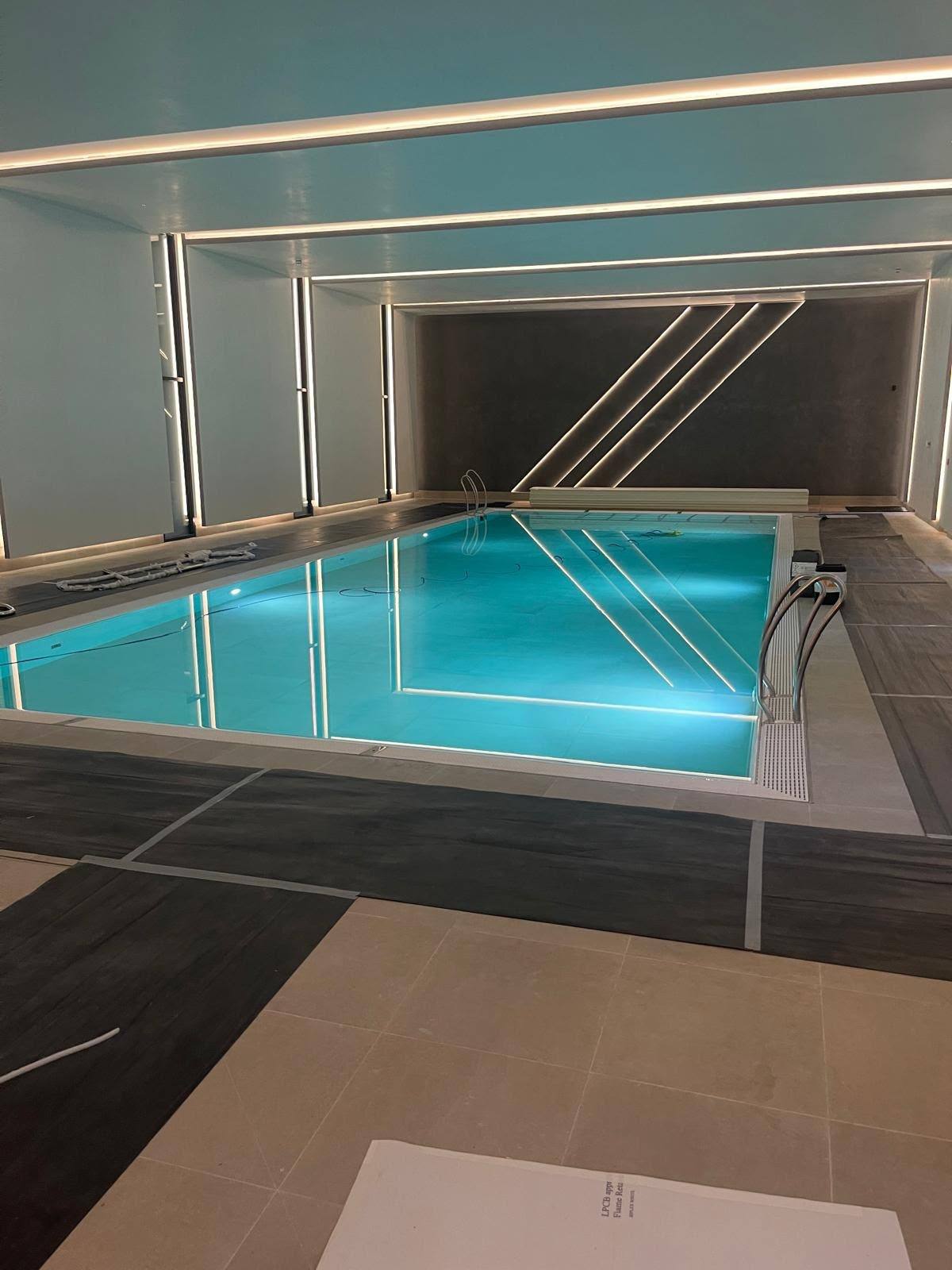
Pool & wet leisure — commercial & private
Swimming Pool & LeisureSealant in Chathambuilt for chlorine and constant wet
Pool halls destroy ordinary silicone. Chlorine-resistant products, correctly sized joints and disciplined preparation give you surrounds and wet-area joints that stay intact and stay white instead of greying off within a season.
£2m public liability cover, CITB and CSCS accredited, RAMS on request, and free quotes after a site visit.
£2m cover
public liability insurance
CITB & CSCS
accredited on site
RAMS on request
for commercial jobs
Free quotes
photo quotes on small jobs
Chatham based
Kent, London & South East
The service
What this work involves
— and who it is for
What pool and leisure sealant work covers
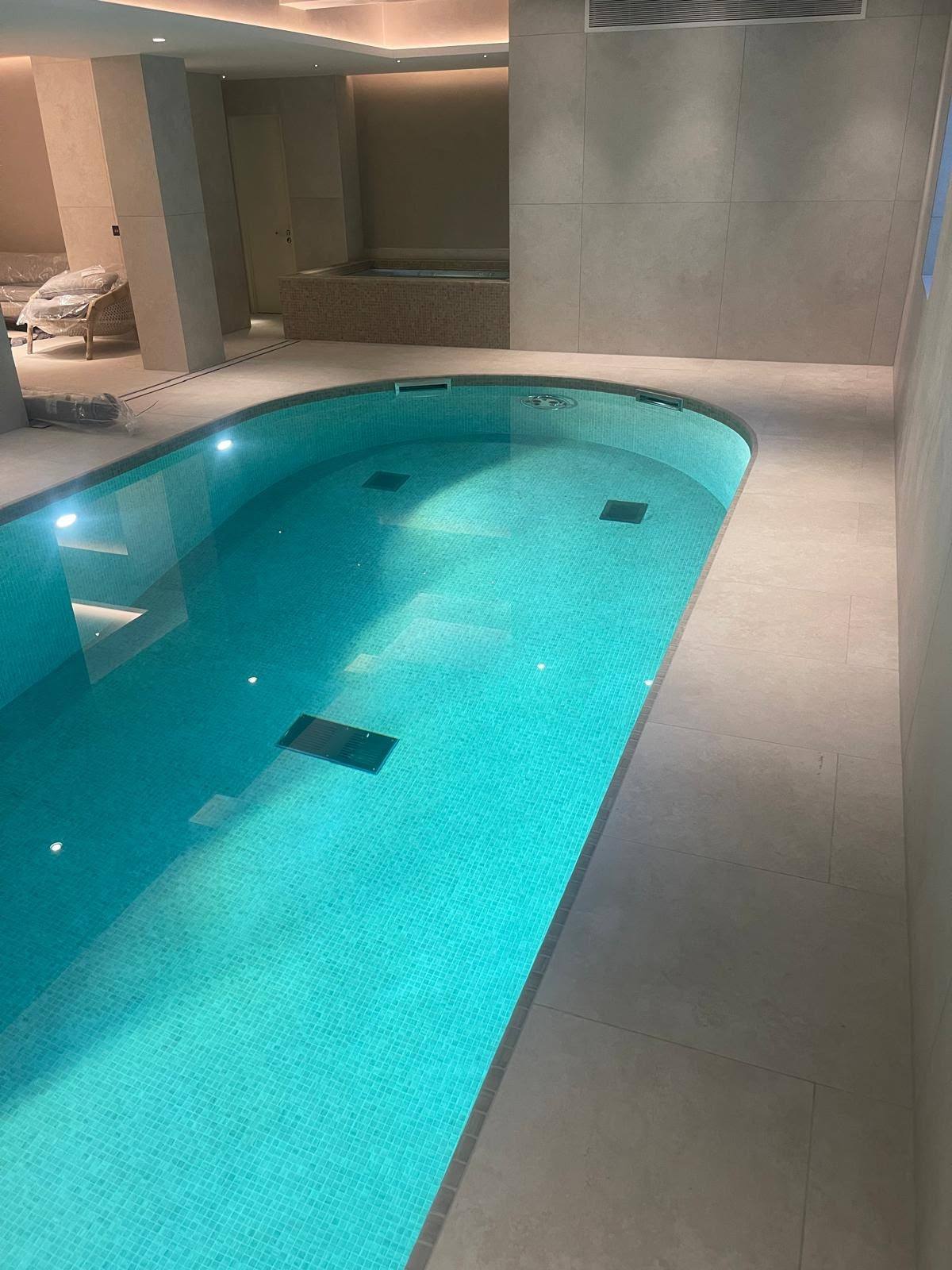
This is sealing in the harshest wet environment a building offers: pool surrounds and coping joints, deck-level and skimmer channel details, movement joints through wet-deck screeds, tiled wet-area junctions, spa and hydrotherapy surrounds, poolside shower zones, changing village floors and cubicle bases, and the wall and floor junctions throughout the wet side of a leisure facility.
It differs from ordinary wet-area sealing in the chemistry involved. Chlorinated water, bromine, ozone systems and the warm, humid, chemical-laden atmosphere of a pool hall attack standard silicone, breaking it down, bleaching it, or letting mould take hold in the film. Products for these areas are selected specifically to resist that environment.
Who it is for
Leisure operators, hotels, schools with pools, health clubs and main contractors and developers building or refurbishing wet leisure facilities. This is largely commercial work: pool halls, changing villages, spa suites and wet play areas, delivered with RAMS on request and worked around opening hours.
Also private pool owners — indoor pools, pool houses, hot tub and swim spa surrounds — where the same chemistry applies at smaller scale and where standard bathroom silicone will not survive the environment.
When it is needed
On new and refurbished pools, once tiling and screeds are complete and before the pool is filled and commissioned — sealing after commissioning means working around a wet, live facility and often around opening hours.
On existing facilities, whenever joints have gone black or grey, split, come away from the tile edge, softened to the point where they can be lifted with a fingernail, or where water is visibly tracking into the deck build-up. In heavily used public pools those joints are wearing items and are worth inspecting at every maintenance shutdown.
Why professional application matters
Two things fail pool joints: the wrong product and the wrong moisture discipline. Standard sanitary silicone in a chlorinated environment will discolour and break down far faster than in a domestic bathroom, and once a joint in a pool surround fails, water gets into a deck build-up that is under near-constant load from splash-out and washdown.
Then there is timing. A pool hall is humid, tiles are cold, and surfaces that look dry are often not. Sealing into that without controlling substrate moisture gives you a bead that never fully adheres. Doing this work properly means working in the right window — usually during a shutdown, with the pool level dropped or covered and the hall dried down — rather than squeezing it in between sessions.
What it costs to leave it
A failed seal never
stays a small problem
A failed joint in a pool hall is not a cosmetic issue for long. Wet decks are structural build-ups with tanking, screeds and fixings inside them, and the whole facility is under a duty to be safe, hygienic and available. Water in the wrong place threatens all three.
Water into the deck build-up
Splash-out and washdown water passing a failed surround joint saturates screeds and reaches tanking laps and fixings. Repair means breaking out tiled deck areas — with the pool out of service while it happens.
Closures and lost revenue
Remedial work in a pool hall usually needs the area shut. Every day of unplanned closure costs bookings, memberships and goodwill — far more than sealing the joints correctly during a planned shutdown.
Hygiene and inspection failures
Open, blackened joints around cubicle bases, showers and changing floors hold water and biofilm. That is exactly what shows up in a hygiene inspection of a wet facility.
Mistakes we get called out to fix
- Using standard bathroom silicone around a chlorinated pool, where it discolours and breaks down within a season.
- Sealing while the hall is at full humidity and the tiles are damp, so the bead never achieves full adhesion.
- Filling wet-deck movement joints solid without backing rod, so they split as the deck expands and contracts.
- Refilling or reopening the pool before the sealant has properly cured.
- Cleaning black joints with abrasives or strong chemicals instead of replacing them, which wears the bead out faster.
How a job runs
The order of work,
start to finish
- 01
Site visit & shutdown planning
We inspect the joints, agree which need replacement, and plan the work around a shutdown or quiet window so the hall can be dried down.
- 02
Free quote & product specification
Fixed written price with the chlorine-resistant products named and colour agreed, checked against your specification or maintenance schedule.
- 03
Removal & drying down
Failed sealant cut out completely, joints cleaned of biofilm and residue, mould treated, and substrates given time to dry properly.
- 04
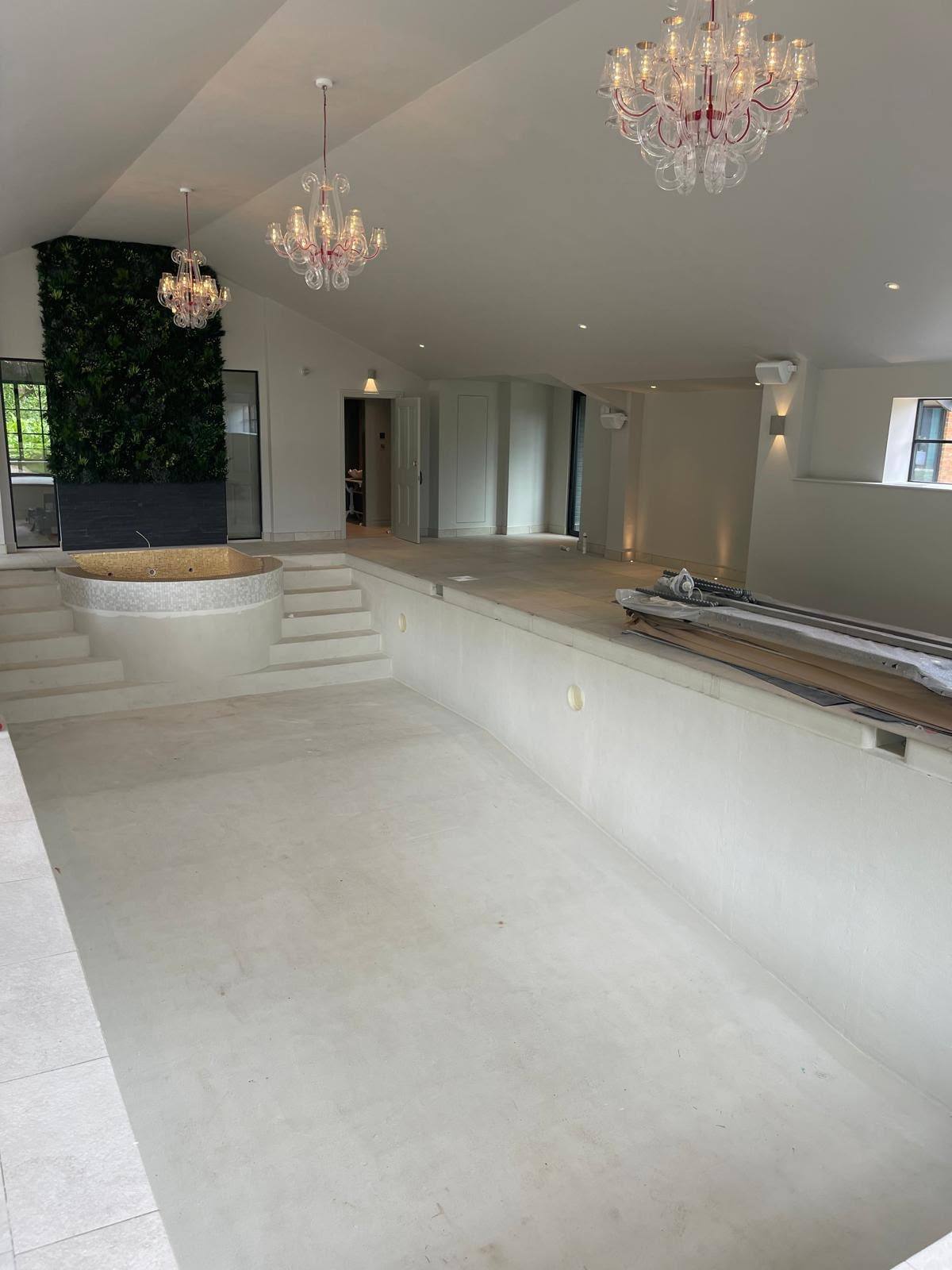
Backing rod & sealing
Movement joints packed with closed-cell backing rod to control depth, then chlorine-resistant sealant applied in continuous passes and tooled.
- 05
Cure period & handback
We give you a clear cure period before refilling or reopening, then walk the completed joints with your site manager or project team.
What you get
The difference a properly
detailed finish makes
Products that survive chlorine
Chlorine-resistant sealants hold up against pool water and pool-hall atmosphere instead of bleaching, softening and breaking down.
Stays clean and inspection-ready
Mould-resistant, properly tooled joints resist the black staining and biofilm that hygiene inspections pick up first.
Deck build-up protected
Continuous, correctly bonded surround joints keep splash-out and washdown water out of screeds, tanking laps and fixings.
Planned, not emergency, downtime
Work scheduled into a shutdown avoids the unplanned closures that cost bookings and memberships.
Movement handled properly
Wet-deck movement joints sized with backing rod flex with the deck rather than splitting through the middle.
Clear reopening guidance
You get a definite cure period before refilling or reopening, so the new joints are not compromised on day one.
In detail
Materials, methods
and the variations we cover
Materials for chlorinated environments
Pool and leisure joints are sealed with chlorine-resistant, sanitary-grade products selected from Mapei, Illbruck, CT1 and Arbo. These are formulated to withstand continuous contact with chlorinated and treated water and the aggressive vapour of a pool hall, and to hold fungicide in the cured film so the joint resists the mould and biofilm that thrive at 29 degrees and high humidity.
Product choice also depends on the joint's job. Static tile-to-tile and tile-to-coping joints in wet areas take sanitary-grade chlorine-resistant silicone. Movement joints through wet decks take low-modulus products sized with closed-cell backing rod so they can absorb thermal and structural movement. Trafficked poolside joints may need a harder-shore product to survive foot traffic, cleaning machines and trolleys. Where the specification calls for a specific product we work to it and name it on the quote.
Method: moisture control is everything
In a pool hall, the difference between a joint that lasts years and one that fails in months is usually moisture at the moment of application. Failed sealant is cut from both faces, biofilm and residue removed rather than smeared, mould treated, and then the joint is given genuine drying time — which in a humid hall may mean lowering the water level, covering the pool, running ventilation or dehumidification, and working during a shutdown rather than overnight between sessions.
Geometry follows the same rules as any movement joint: roughly 2:1 width to depth, bonded to two faces only, with backing rod compressed to set depth. Beads are gunned continuously and tooled immediately to a concave profile that sheds water and gives cleaners a wipeable radius. The cure period before refilling or reopening is then non-negotiable — a chlorine-resistant sealant immersed before it has cured is a chlorine-resistant sealant that fails early.
Variations we cover in wet leisure
Pool surround and coping joints. Deck-level and skimmer channel details. Tile-to-tile and tile-to-coping wet-area joints. Movement joints through wet-deck screeds and tiled decks. Steps, ramps, handrail bases and grate surrounds. Poolside shower and rinse-off zones. Spa, sauna approach, hydrotherapy and hot tub surrounds. Changing villages: cubicle bases, benching, locker plinths, floor-to-wall junctions and IPS panel perimeters. Wet play areas and splash zones. Plant room and filtration area floor junctions.
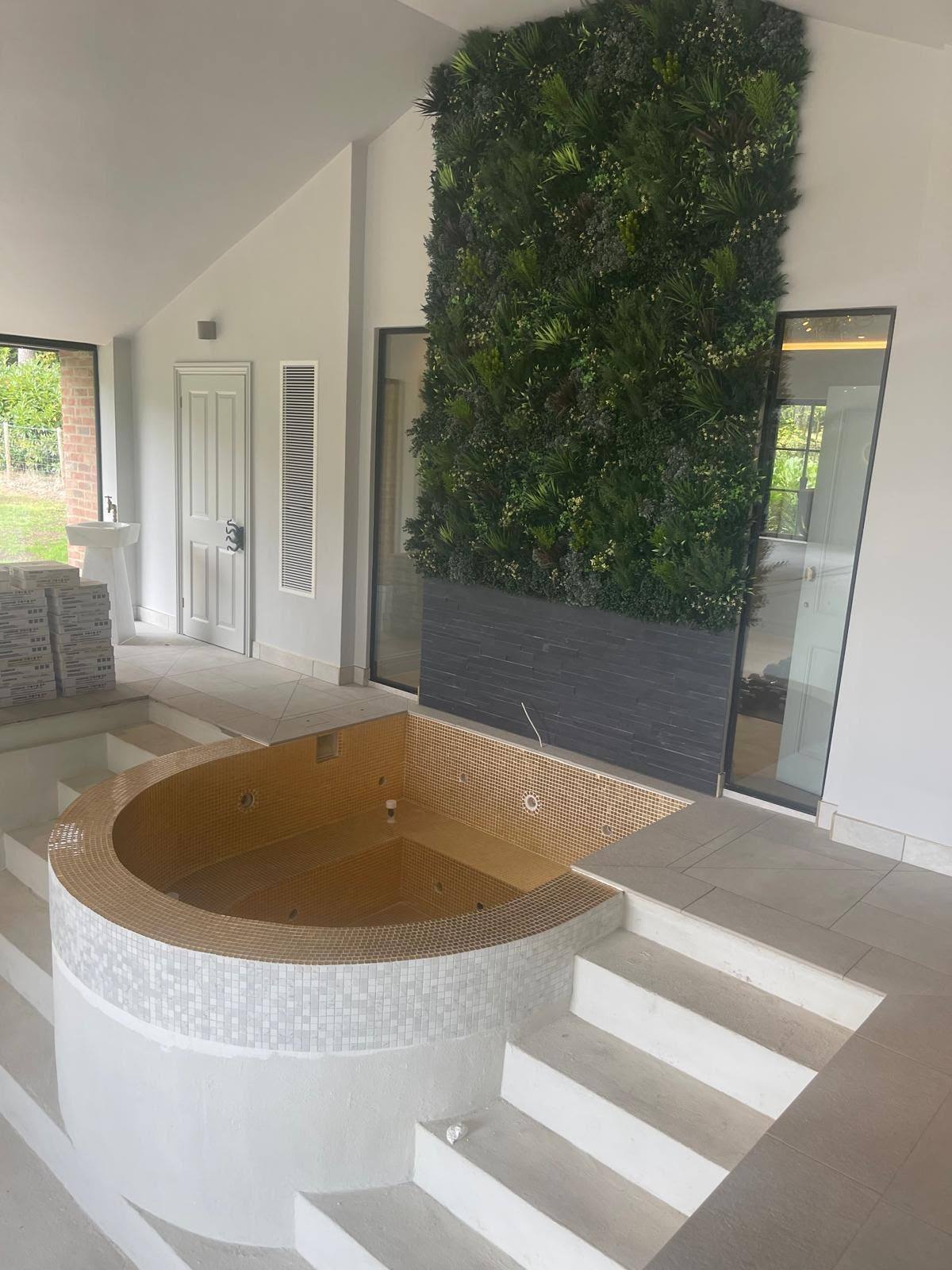
Private indoor pools and pool houses get the same specification at smaller scale — including hot tub and swim spa surrounds, where standard bathroom silicone routinely fails within a year.
Commercial and private differences
Commercial wet leisure work is dominated by logistics: shutdown windows, safeguarding requirements at school pools, plant and pool chemistry, access around the wet deck, hygiene protocols, and phasing so parts of a facility stay open. We provide RAMS on request, hold CITB and CSCS accreditation and carry £2 million public liability insurance, and we plan around your maintenance calendar rather than expecting the facility to work around us.
Private pools and spas are simpler to schedule but the chemistry is identical. The main difference is that a private owner is usually discovering for the first time that ordinary silicone was never going to survive their pool — so part of the job is explaining why the replacement product is different, and what cure time is needed before the pool goes back into use.
Questions
What customers ask
before booking
- How is pool sealant work priced?
- Quoted individually and free of charge, after a site visit — joint lengths, access around the wet deck, shutdown constraints and the products specified all affect the figure. We do not publish 'from' prices for this work.
- Why has the silicone around my pool gone black or soft?
- Almost always because a standard sanitary silicone was used rather than a chlorine-resistant product, and it has been attacked by pool water and pool-hall atmosphere. Cutting it out and resealing in the correct product is the fix.
- Does the pool need to be emptied?
- Not usually emptied, but the water level often needs dropping and the hall needs drying down so joints can be sealed to a dry substrate. We plan that with you before the visit.
- How long before we can refill or reopen?
- It depends on the product and conditions, and we give you a firm figure on the day. As a rule, allow a full cure period of at least 24 hours before immersion — putting a curing joint under water early is the surest way to shorten its life.
- How long should pool joints last?
- Correctly specified chlorine-resistant joints in a well-run pool give years of service, but they are wearing items in a heavily used public facility and are worth inspecting at each maintenance shutdown. We do not advertise a guarantee; we specify the right product and tell you what to expect.
- Can you work around our opening hours?
- Yes — we plan around shutdowns, quiet periods and maintenance windows, and phase work so parts of the facility can stay open where possible.
- Do you work at school and hotel pools?
- Yes. School pools, hotel and health-club pools and spa suites are all regular environments for us, with RAMS on request, CITB and CSCS accreditation and £2m public liability cover in place before we start.
- Can the sealant be colour matched to our tiling?
- Yes — chlorine-resistant products are available in a range of shades, so surround and wet-area joints can match the pool tiling or grout rather than reading as a white line.
- Do you seal hot tubs and swim spas?
- Yes, including private installations — surrounds, plinths and adjacent wet-area junctions, using chlorine and bromine-resistant products rather than standard bathroom silicone.
- Which areas do you cover?
- Kent, London and the South East from our base at The Historic Dockyard in Chatham — including Maidstone, Sevenoaks, Tunbridge Wells, Kings Hill, Meopham, Whitstable, Tenterden, Bexley and the City of London.
Related sealant services
- Anti-mould sealant
Mould-resistant products for bathrooms, wet rooms and washrooms that stay cleaner for longer.
- Bathroom, wet room & kitchen sealing
Clean, watertight beads around baths, showers, trays and worktops — for homes in Chatham and for commercial washrooms alike.
- Expansion joint sealing
Correctly sized and backed movement joints that flex with the structure instead of splitting through the middle.
- Floor line & wall joint mastic
Consistent mastic lines to floor and wall junctions across large commercial areas — corridors, plant rooms and open floor plates.
- All sealant services
Where we work
Based at The Historic Dockyard in Chatham, covering Kent, London and the South East — including Sevenoaks, Tunbridge Wells, Maidstone, Kings Hill, Tenterden, Whitstable and City of London.
Seal the wet side properly during your next shutdown
Tell us your maintenance window and we will visit, price the joints free of charge, name the chlorine-resistant products and plan the work so the facility reopens on schedule.
£2m public liability cover · CITB & CSCS accredited · RAMS on request · Mon–Sat, 7am–7pm · Sunday closed