
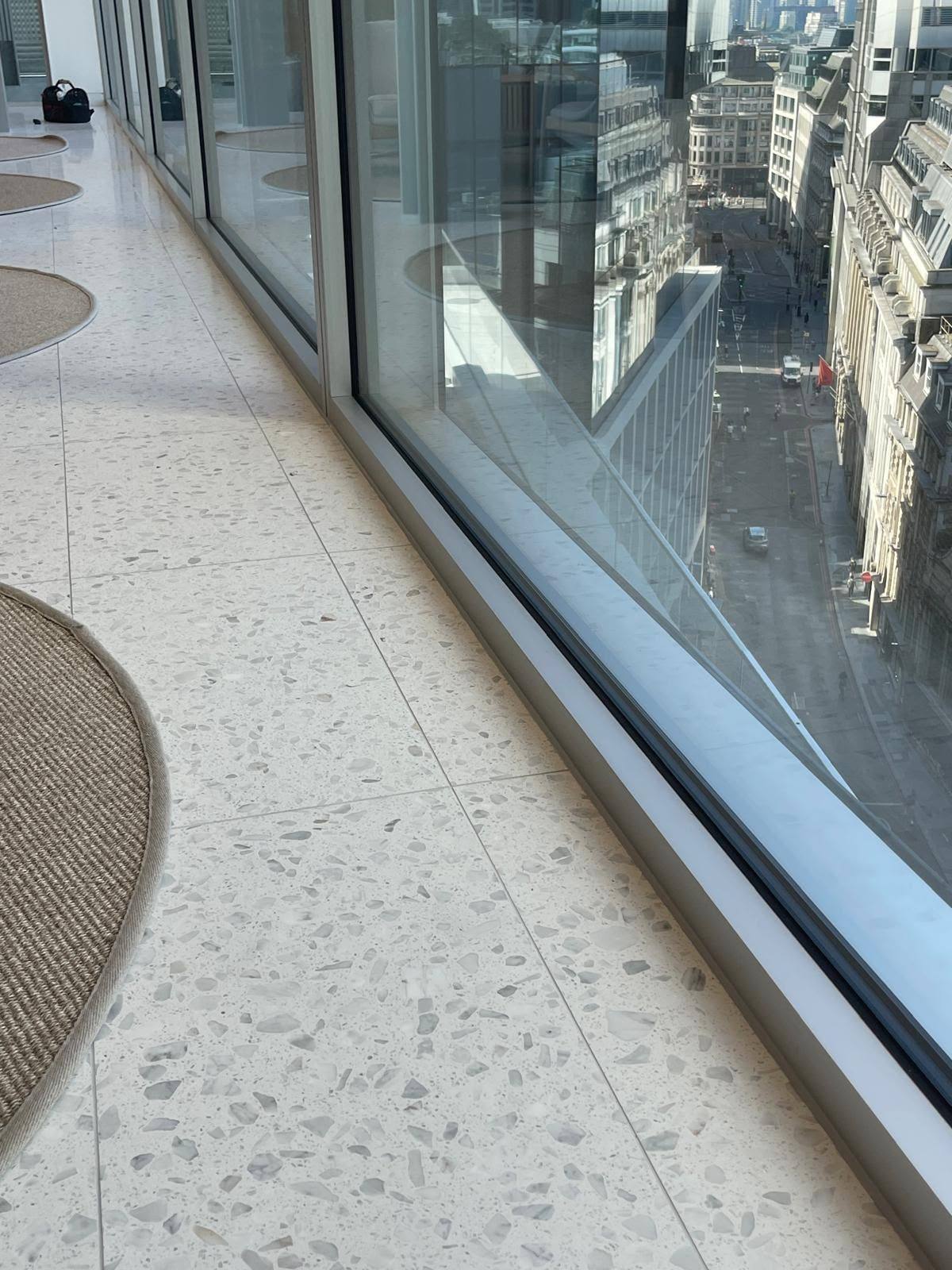
Facade sealing — commercial
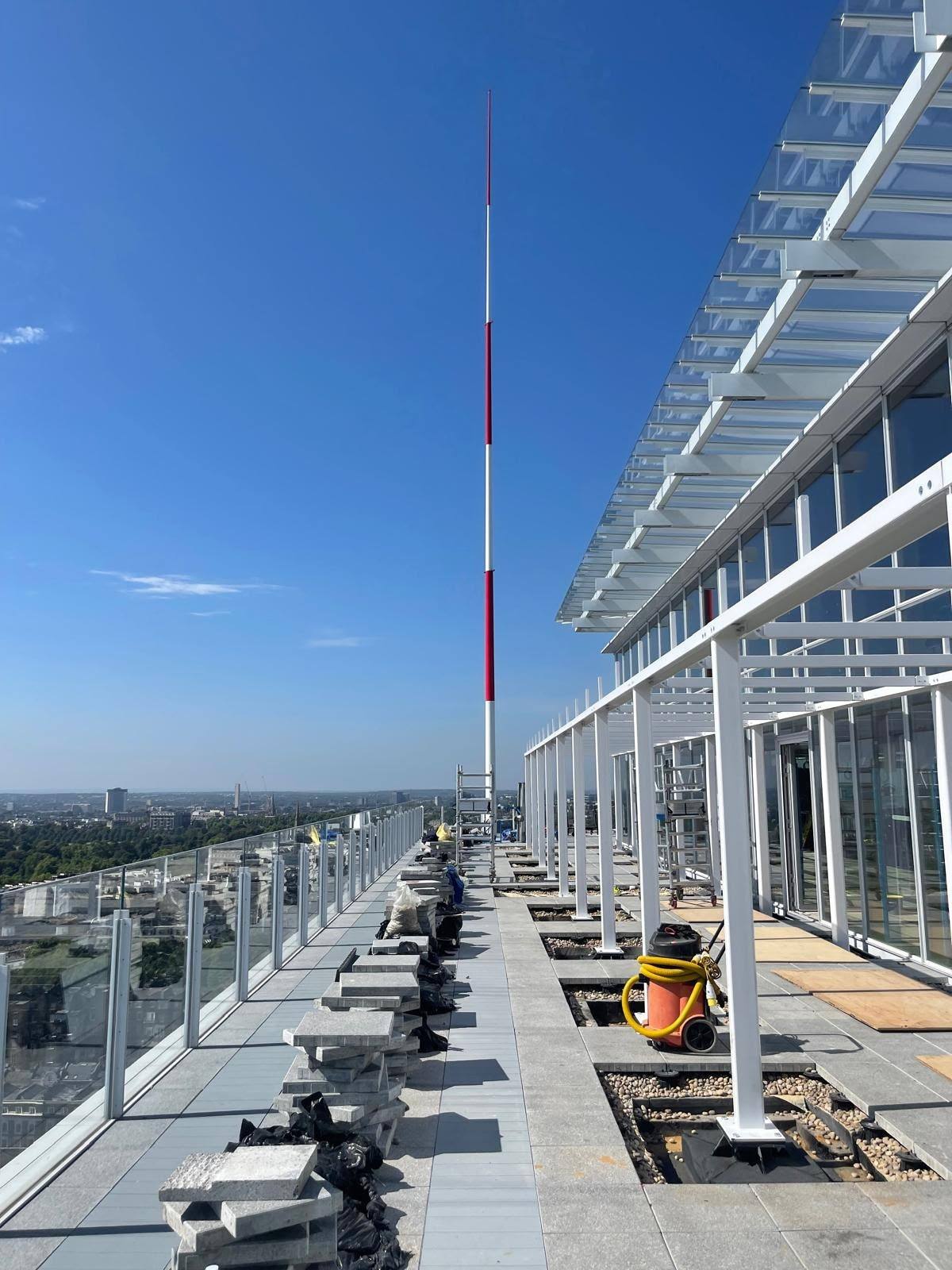
Cladding & Curtain WallingSealing in Chathamstraight lines, twenty storeys up
Facade joints that read as one clean line from ground level and keep weather out of the build-up: neutral-cure products that will not attack coatings, joints sized for real panel movement, and beads tooled to shed water.
£2m public liability cover, CITB and CSCS accredited, RAMS on request, worked from the scaffold, MEWP or cradle provided.
£2m cover
public liability insurance
CITB & CSCS
accredited on site
RAMS on request
for commercial jobs
Free quotes
photo quotes on small jobs
Chatham based
Kent, London & South East
The service
What this work involves
— and who it is for
What facade sealing covers
Cladding and curtain walling sealing is the weather and movement line of a facade: panel-to-panel joints, mullion and transom junctions, perimeter abutments where the system meets masonry or concrete, cill and coping interfaces, spandrel and infill panel joints, and the sealing of penetrations and brackets through the facade line.
The work is dictated by the system. Some joints are designed to be sealed as the primary weather line; others are drained and ventilated details where sealing the wrong opening traps water inside the build-up. We work to the facade detail, seal what is meant to be sealed, and leave designed drainage paths open.
Who it is for
Main contractors, developers, construction companies and facade contractors on new builds, building refurbishments, office refurbishments and schools — anywhere cladding, rainscreen or curtain walling needs sealing to a consistent line across an elevation.
Also building owners and managing agents with ageing facades where the original joints have hardened, split or detached and are letting water into the build-up.
When it is needed
On new facades once panels and framing are installed and set out, and always while access is still available. Sealing an elevation from scaffold that is already up is a fraction of the cost of returning to the same joints after it has been struck.
On existing facades, when joints have crazed or hardened, when a bead has pulled away from a panel edge, when water is appearing internally in a band along a facade line, or as part of a planned facade maintenance cycle.
Why professional application matters
Facade joints combine the hardest technical demands in the trade: high movement, full weather exposure, UV, and sensitive substrates. Coated aluminium, powder-coated panels, anodised sections, glass and natural stone all react badly to the wrong sealant chemistry — acidic-cure products can attack coatings and stain stone permanently, which is why neutral-cure low-modulus silicone is the standard here.
Then there is the visual test. A facade is inspected from the ground, from across the street and in photographs. Bead width, straightness and profile have to be identical across hundreds of metres and multiple lifts, applied by people working from cradles, MEWPs or scaffold. Getting that consistency at height is a skill, not a formality.
What it costs to leave it
A failed seal never
stays a small problem
Facade joints are the most expensive sealant on a building to get wrong, because everything about putting it right involves access. The material cost is trivial; the scaffold, cradle or MEWP hire to reach the joint a second time is not.
Water into the build-up
A failed facade joint lets driving rain behind panels, where it wets insulation, reaches brackets and fixings and tracks internally. By the time it shows on a ceiling, it has been happening for months.
Access costs paid twice
Remedial facade sealing means re-mobilising scaffold, cradles or MEWPs, plus permits and traffic management. That cost usually dwarfs the sealing itself.
A facade that looks wrong from the street
Inconsistent bead widths and wandering lines on a glazed or panelled elevation are visible from the pavement and impossible to hide — and they are the first thing a client photographs.
Mistakes we get called out to fix
- Using acidic-cure silicone against coated aluminium, anodised sections or natural stone, attacking coatings and staining stone.
- Sealing drained and ventilated cladding joints closed, trapping water inside the build-up instead of letting it drain.
- Filling wide panel joints solid without backing rod, so the bead cannot absorb panel movement and tears.
- Sealing dusty, damp or release-agent-contaminated panel edges without cleaning or priming.
- Applying beads in short passes at different widths across lifts, leaving a facade line that visibly changes storey by storey.
How a job runs
The order of work,
start to finish
- 01
Facade detail review
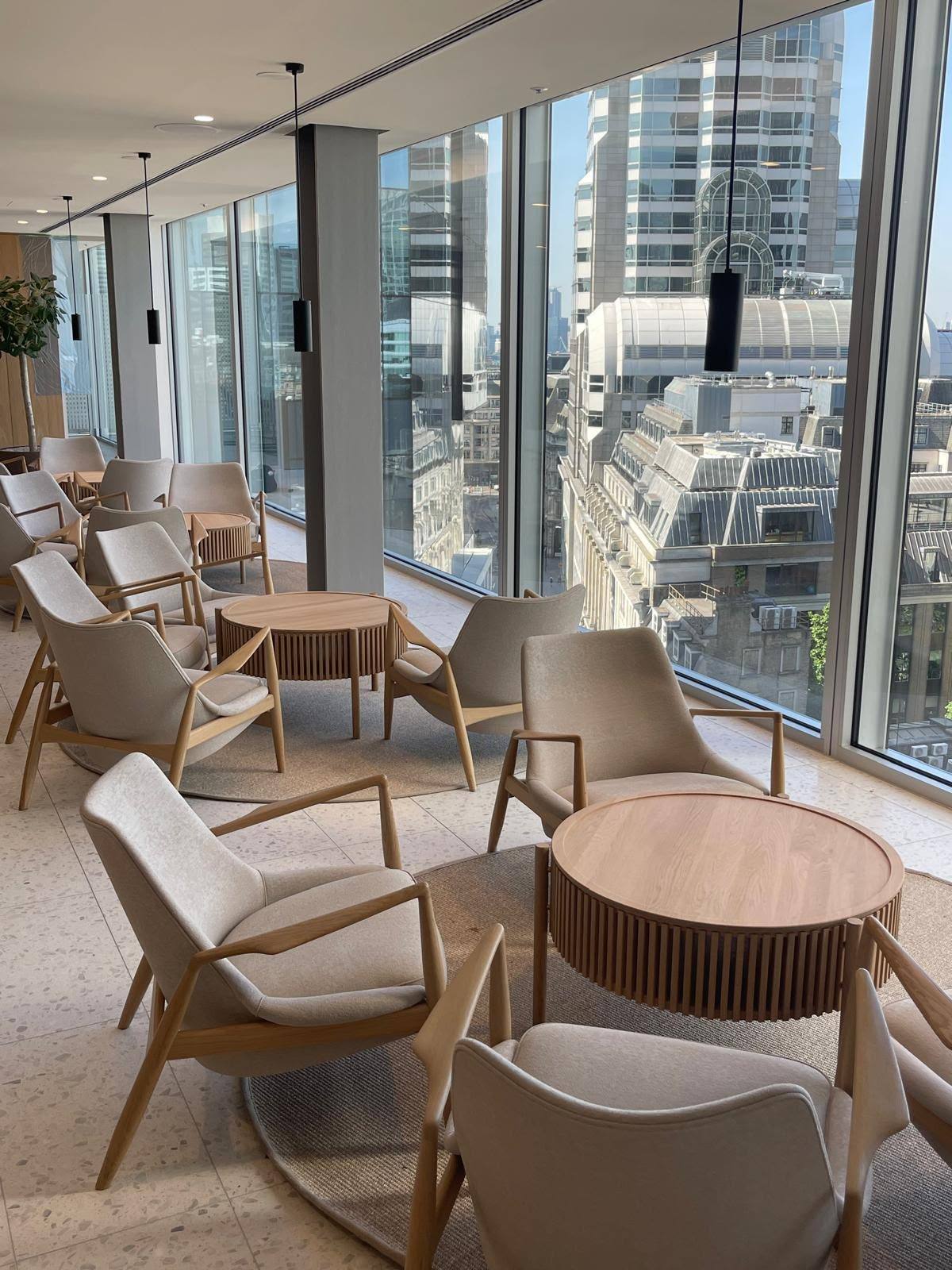
We work from the facade drawings and system details to confirm which joints are sealed weather lines and which are drained and must stay open.
- 02
Free quote & access planning
A fixed written price against measured joint runs, with products and colour named, and the work planned around the scaffold, cradle or MEWP available.
- 03
Preparation at height
Old sealant cut out where remedial, panel edges cleaned of dust and contamination, and primer applied where the manufacturer requires it.
- 04
Backing rod & sealing
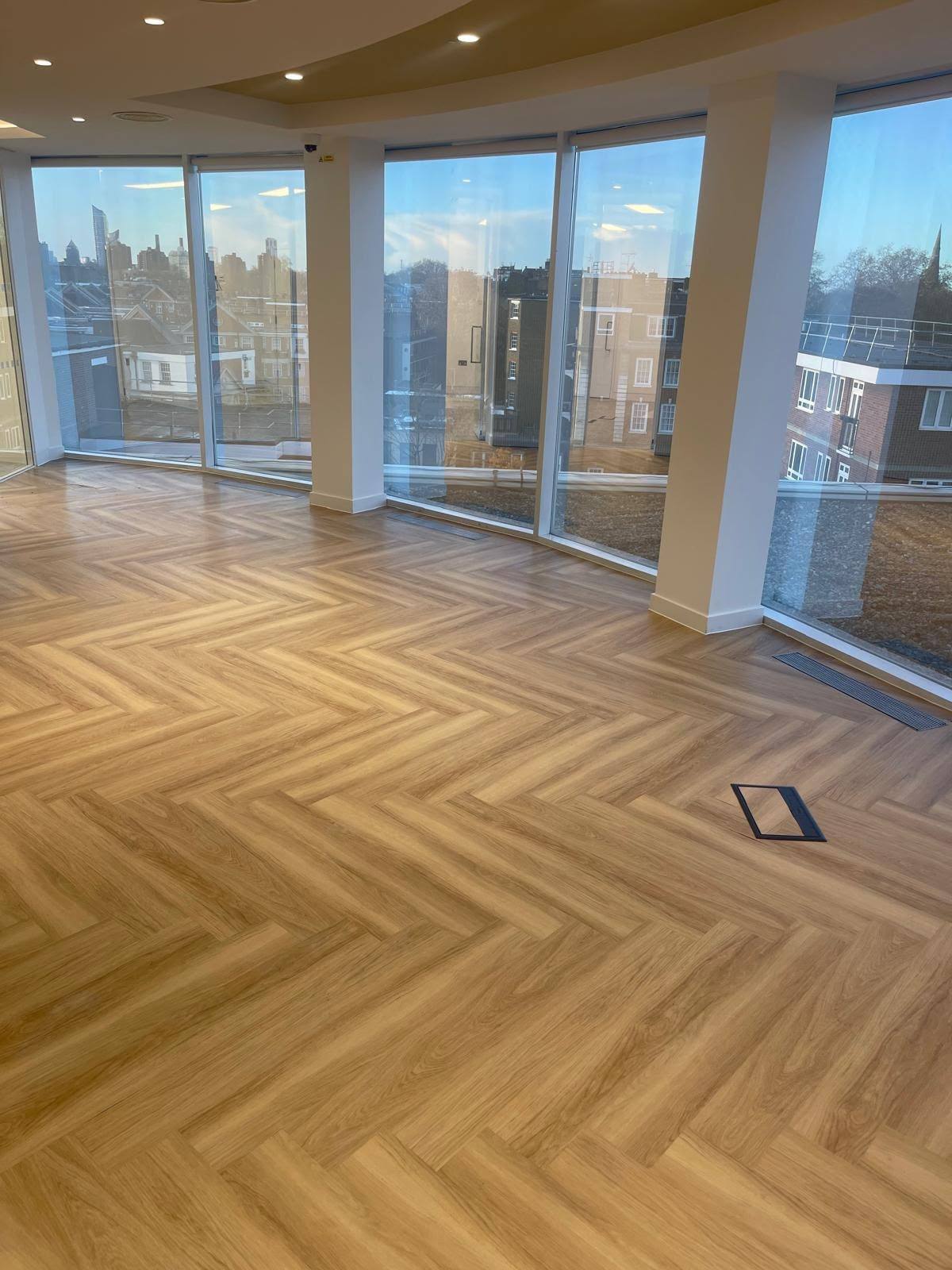
Closed-cell backing rod sized to each joint to control depth, then neutral-cure low-modulus beads applied in continuous passes and tooled to shed water.
- 05
Lift-by-lift verification
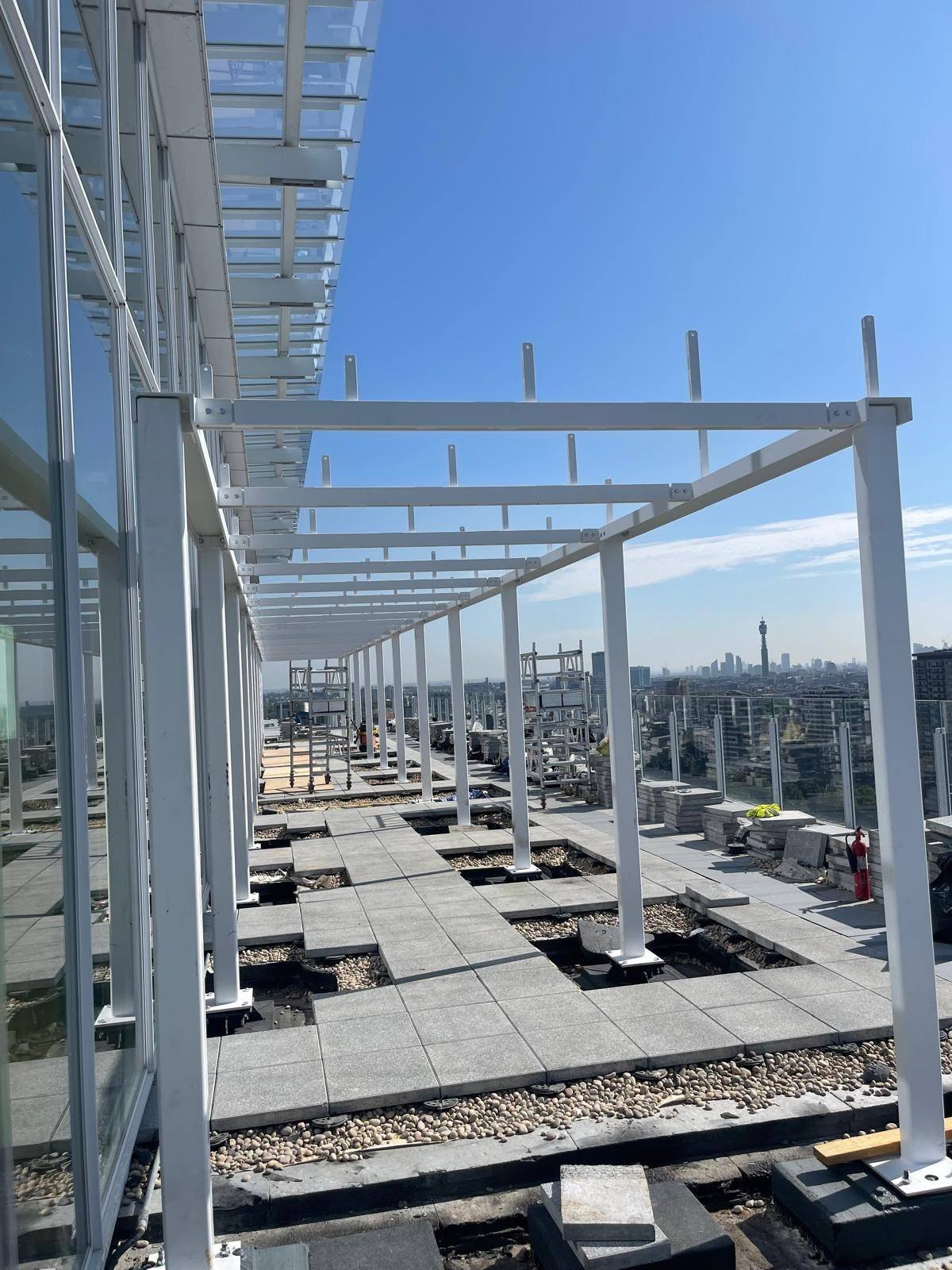
Each lift is checked for width, profile and continuity before access moves on, then the elevation is reviewed from ground level and signed off.
What you get
The difference a properly
detailed finish makes
One line down the elevation
Set-out bead width held across every lift, so the facade reads as a designed grid rather than a patchwork.
Weathertight in exposure
Correctly bonded, UV-stable joints keep wind-driven rain out of the panel build-up and away from brackets and insulation.
Coatings and stone protected
Neutral-cure products used against powder coating, anodised aluminium, glass and natural stone avoid coating attack and permanent staining.
Panel movement absorbed
Joints sized with backing rod let panels expand and contract through the seasons without tearing the bead.
Access used once
We plan the whole elevation into the access window you already have, so nothing needs re-mobilising later.
Drainage left working
Designed drained and ventilated details are identified and left open, so sealing does not turn the facade into a reservoir.
In detail
Materials, methods
and the variations we cover
Materials for facades
Facade joints are sealed with neutral-cure, low-modulus, UV-stable silicones from Mapei, Illbruck, CT1 and Arbo. Neutral cure is non-negotiable against powder-coated and anodised aluminium, glass, composite panels and natural stone, because acidic-cure chemistry can attack coatings and stain porous stone in a way that cannot be reversed. Low modulus matters because panel joints move significantly with temperature and the sealant must stretch without pulling itself off the panel edge.
Colour is specified alongside chemistry. Facade sealants are available in a wide range of shades and are usually matched to the panel, frame or RAL reference so joints sit into the elevation. On stone and masonry interfaces the match is to the stone tone. Where the specification names a product, we work to it and confirm it on the quote; where it does not, we recommend and get sign-off before ordering, because facade quantities are large and colour changes late are expensive.
Method: working accurately at height
Preparation at height follows the same discipline as at ground level, with less margin for error. Existing sealant is cut out on remedial work rather than overlaid; panel edges are cleaned of dust, salts and release agents; primer is applied where the manufacturer specifies it for the substrate. Joints are then packed with closed-cell backing rod sized above the joint width so it compresses and stays put, establishing a consistent depth and preventing three-sided adhesion.
Beads are gunned in continuous vertical or horizontal passes and tooled immediately to a concave profile that presses the sealant into contact with both panel faces and throws water clear. Consistency is managed lift by lift: bead width is set out at the start, checked as each lift completes, and reviewed from ground level, because a facade is judged from the pavement and not from the cradle. Weather windows are respected — sealing onto damp panels or below the product's minimum temperature buys a joint that will fail early and be expensive to reach.
Variations we cover
Panel-to-panel joints on rainscreen and composite cladding. Curtain walling mullion and transom joints. Spandrel and infill panel perimeters. Structural glazing perimeter pointing where specified. Facade-to-masonry and facade-to-concrete abutments. Window and door interfaces within the facade line. Cill, coping and parapet junctions. Soffit and reveal joints at recesses and entrances. Movement joints through cladding runs. Sealing around brackets, penetrations and facade-mounted fixings. Remedial resealing of ageing or failed facade joints installed by others.
Where a joint sits within a drained and back-ventilated system, we work to the system detail rather than sealing on sight — identifying which openings are the weather line and which are drainage is part of the job.
Commercial focus and site logistics
This is commercial work and the logistics are as important as the sealing. We work from the access provided — scaffold, MEWP or cradle — and plan our visits around its availability, alongside facade, glazing and roofing trades. RAMS are issued on request, CITB and CSCS accreditation covers site induction, and £2 million public liability insurance is in place before we start.
On occupied buildings and refurbishments we phase work around tenants, entrances and pedestrian routes, protect glazing and completed finishes, and keep the working zone clean. Because we are a two-person owner-run team, the people who priced the elevation are the people applying the sealant — which is why the bead looks the same on the top lift as on the first.
Questions
What customers ask
before booking
- How do you price facade sealing?
- By measured joint run, taken off the facade drawings and confirmed on site, with access assumptions stated clearly. Quotes are free and fixed in writing, with products and colour named.
- Do you provide access equipment?
- We work from the scaffold, MEWP or cradle provided on site. If access is not yet arranged we will tell you what is needed so it can be planned and priced properly rather than assumed.
- Which sealant do you use on coated aluminium and stone?
- Neutral-cure, low-modulus silicone. Acidic-cure products can attack powder coating and anodising and stain natural stone permanently, so they have no place on a facade of that type.
- How long do facade joints last?
- A correctly specified, correctly sized facade joint typically gives fifteen to twenty-five years depending on exposure and UV loading, with south and south-west elevations ageing fastest. We do not advertise a guarantee; we detail the joint so it earns that life.
- Can you match the sealant to our panel colour?
- Yes. Facade sealants come in a wide range of shades and can be matched to the panel, frame or RAL reference. We agree the colour before ordering because facade quantities are large.
- Can you reseal an existing facade without stripping panels?
- In most cases yes — the failed bead is cut out from the joint and replaced in situ. Where a joint has been designed as part of a panel replacement sequence we will tell you what has to come off first.
- Do you seal every joint on the elevation?
- No — and that matters. Drained and back-ventilated cladding systems rely on open drainage paths. We work to the facade detail so the weather line is sealed and the drainage is left to work.
- Can you work in winter or in poor weather?
- We work year-round but respect weather windows: joints must be dry and above the product's minimum application temperature. Sealing wet panels at height guarantees a return visit, at access cost.
- What paperwork do you provide?
- RAMS on request, CITB and CSCS accreditation and evidence of £2 million public liability insurance, sent before induction so nothing holds up your first lift.
- Which areas do you cover?
- Kent, London and the South East from our base at The Historic Dockyard in Chatham, including Maidstone, Sevenoaks, Tunbridge Wells, Kings Hill, Meopham, Whitstable, Tenterden, Bexley and the City of London.
Related sealant services
- External silicone sealant
Weatherproof external joints specified for UK exposure and movement — brick, render, stone, cladding and copings.
- Window & door silicone sealing
Perimeter sealing that keeps draughts and driving rain out of the building envelope, internally and externally.
- Expansion joint sealing
Correctly sized and backed movement joints that flex with the structure instead of splitting through the middle.
- Commercial silicone sealant application
Sealant packages for office refurbishments, new builds, building refurbishments and schools, worked to the main contractor's programme.
- All sealant services
Where we work
Based at The Historic Dockyard in Chatham, covering Kent, London and the South East — including Sevenoaks, Tunbridge Wells, Maidstone, Kings Hill, Tenterden, Whitstable and City of London.
Seal the elevation while the access is still up
Send the facade drawings and your access dates. We will measure the joint runs, confirm products and colour, and come back with a free fixed price and RAMS ready to issue.
£2m public liability cover · CITB & CSCS accredited · RAMS on request · Mon–Sat, 7am–7pm · Sunday closed